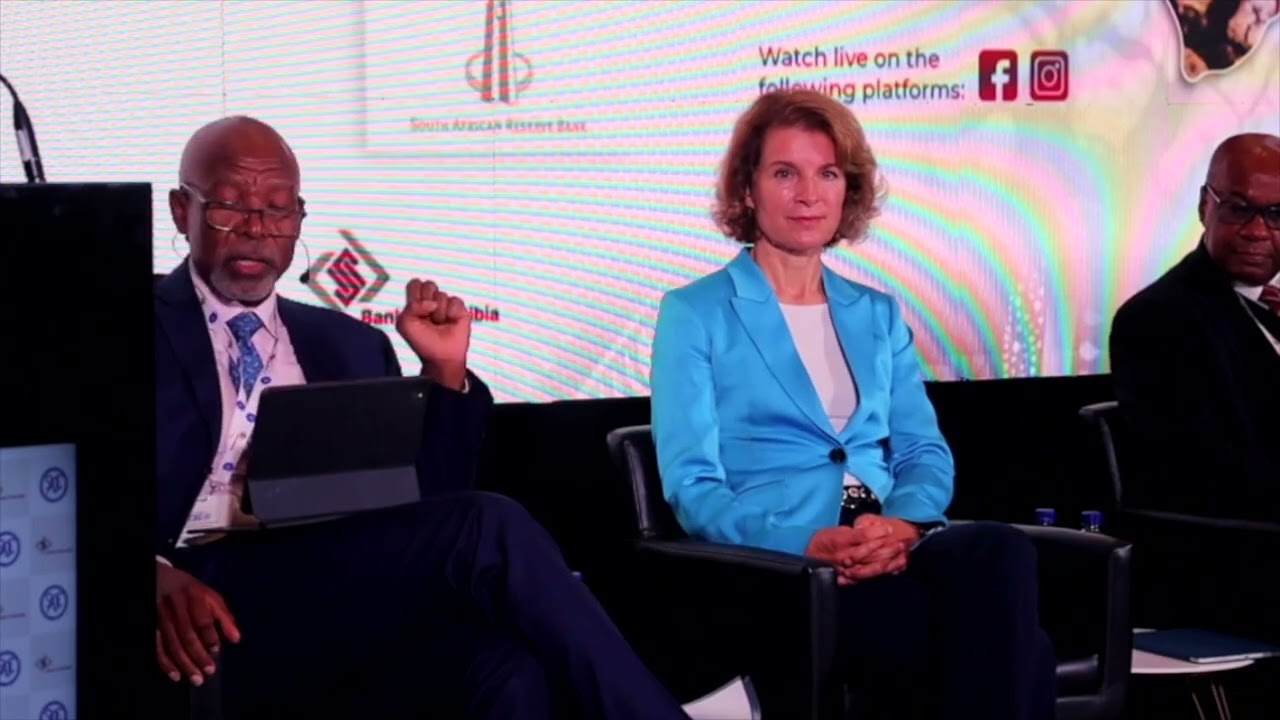
Remarks delivered by Mr. Lesetja Kganyago, the South African Reserve Bank (SARB) Governor and the Chair of the Committee of Central Bank Governors (CCBG), were presented at the 57th SADC Committee of Central Bank Governors Meeting. This meeting concentrated on central bank approaches to sustainability and occurred on the 8th of September 2023 in Swakopmund, Namibia. Governor Kganyago underscored the significance of addressing climate change within the context of financial stability and the monetary policy mandates assigned to central banks, while cautioning against the risks of mission creep. He brought attention to proactive initiatives undertaken by the South African Reserve Bank, which include the development of climate change indicators and disclosure guidance, aligning these efforts with their supervisory actions to enhance financial institutions’ resilience against climate-related risks. The South African Reserve Bank’s primary objective is to safeguard the currency’s value to ensure balanced and sustainable economic growth within the Republic. The South African Reserve Bank must execute its functions independently and without bias or prejudice, supporting its principal goal. The valuation of the rand is influenced by the strategic application of interest rates aimed at maintaining low and stable inflation under the framework of Monetary Policy. The mandate encompasses protecting and enhancing financial stability and identifying and mitigating systemic risks that may disrupt the financial system. Prudential Regulation mandates the Prudential Authority to oversee financial institutions and market infrastructures to promote their safety and soundness, thereby bolstering financial stability. Open market operations constitute the primary tool utilised to implement monetary policy in the financial markets.
Additionally, the SARB manages South Africa’s gold and foreign exchange reserves. Financial Surveillance is concerned with regulating cross-border transactions to avert financial system abuses and facilitate financial institutions’ oversight. The payments and settlements function indicates that the SARB is tasked with ensuring the safety and soundness of the national payment system, which underpins South Africa’s modern financial architecture. The SARB is responsible for presenting vital economic and financial statistics that provide an overview of the economic conditions in South Africa. The research conducted by the SARB centres on economics, financial stability, banking, and emerging trends in finance, thereby supporting policy decision-making. Furthermore, the SARB has the exclusive right to produce, issue, and destroy banknotes and coins within South Africa.
Lesetja Kganyago currently serves as the Governor of the South African Reserve Bank. He was first appointed to this role on the 9th of November 2014 and subsequently reappointed by the President of South Africa for a second five-year term in 2019, effective from the 9th of November 2019 until the 8th of November 2024. In 2024, the President reappointed Governor Kganyago for a third five-year term, which is set to be effective from the 9th of November 2024 until the 8th of November 2029. Before being appointed Governor, he held the position of Deputy Governor of the SARB from the 16th of May 2011 until his elevation to the Governorship. Governor Kganyago chairs the Monetary Policy Committee, the Prudential Committee, and the Financial Stability Committee. He also chairs the Committee of Central Bank Governors of the Southern African Development Community and the Bank for International Settlements’ Central Bank Governance Group, in addition to co-chairing the Financial Stability Board’s Cross-Border Payments Coordination Group and the Regional Consultative Group for Sub-Saharan Africa.
Furthermore, he served as Chairperson of the International Monetary and Financial Committee, the primary advisory board to the International Monetary Fund Board of Governors, from January 18, 2018, to January 17, 2021. Governor Kganyago holds an MSc in Economics from SOAS University of London and a BCom in Economics and Accounting from the University of South Africa. He has also received extensive training in finance, economics, and management.
Remarks by Mr. Lesetja Kganyago, Governor of the South African Reserve Bank (SARB)










コメントを残す